Chandelier DNA
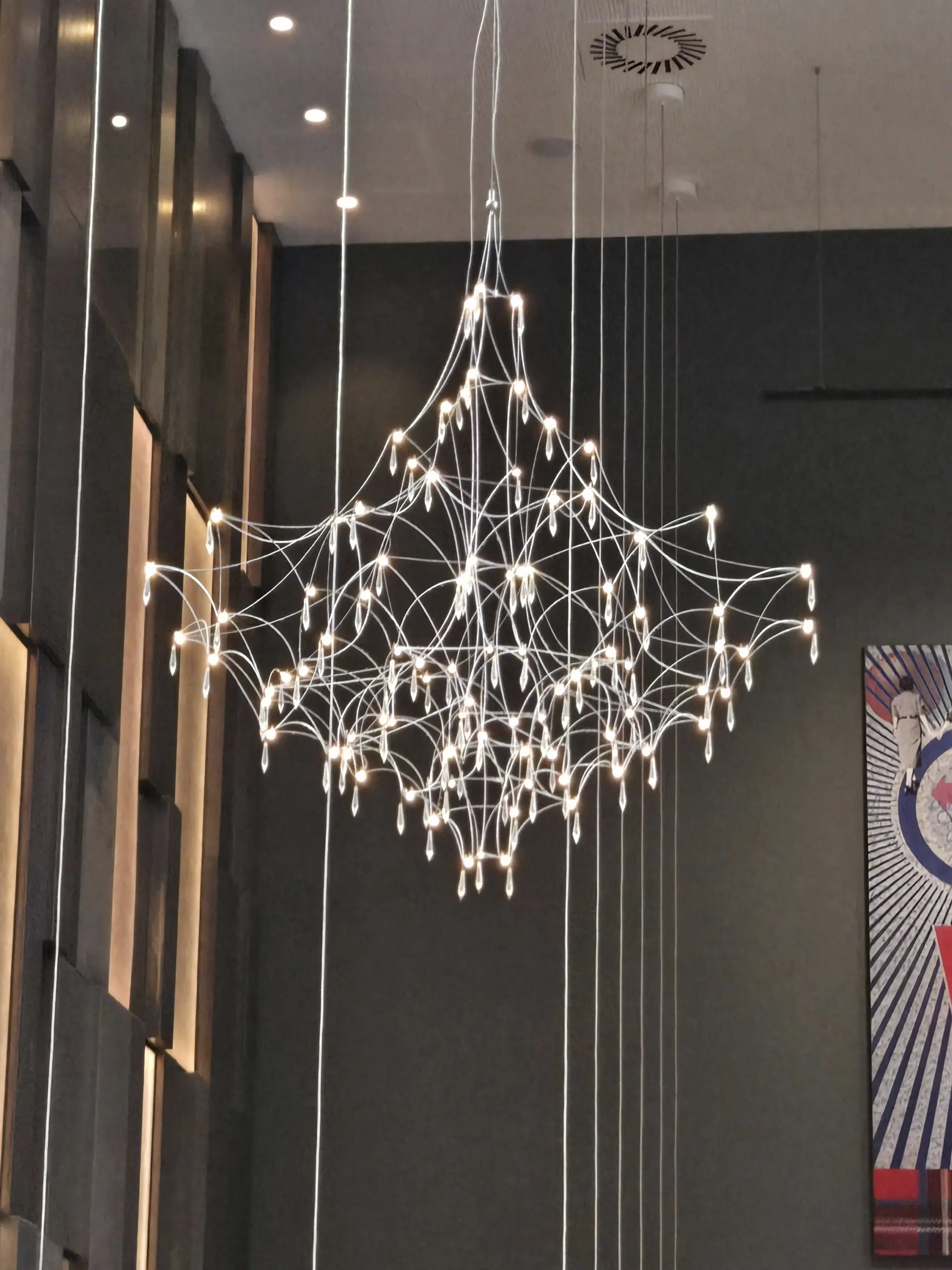

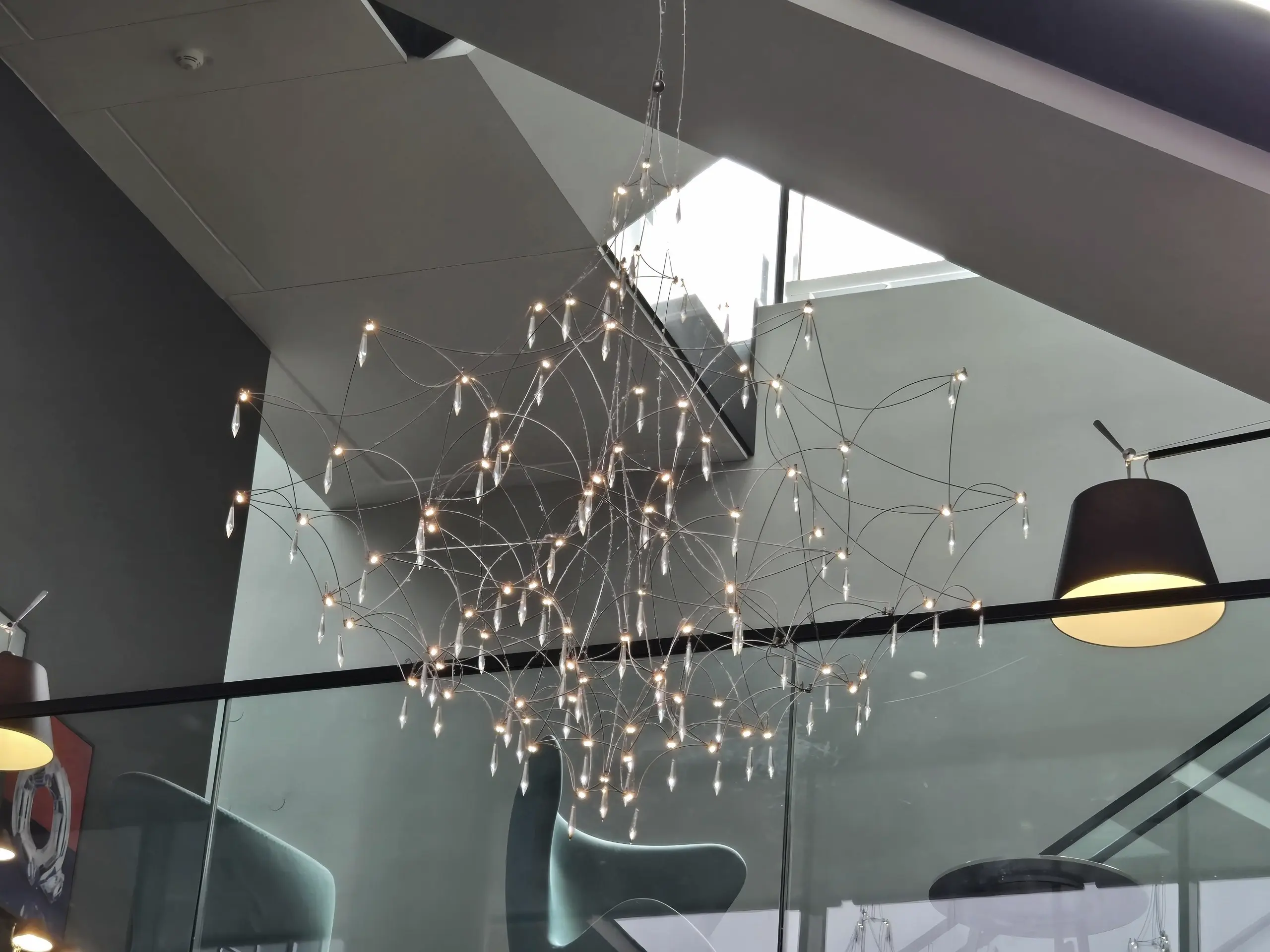
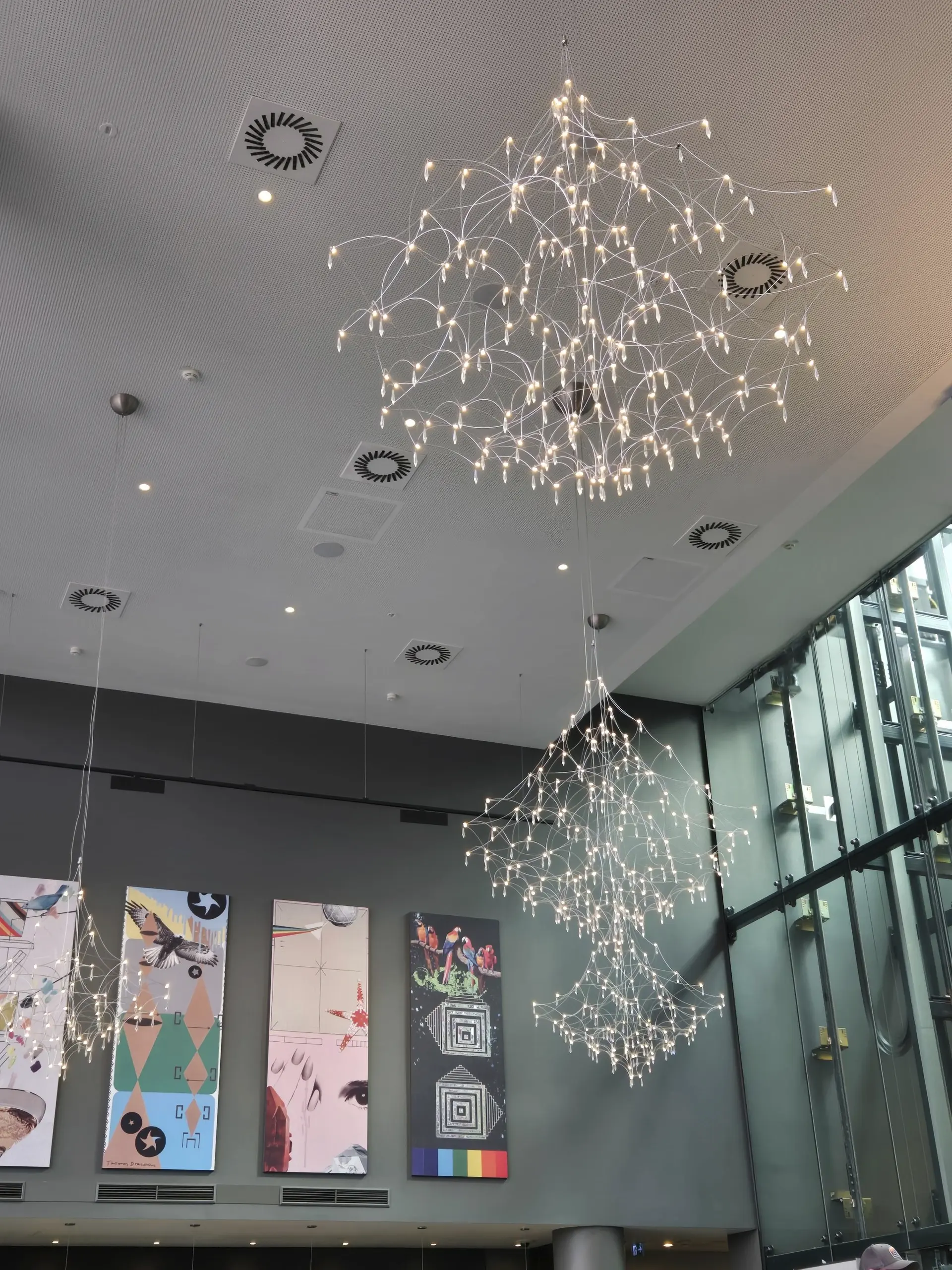
Over coffee with a friend in the lobby of Motel One at Westbahnhof, I looked up into the vast empty space shaped by the hotel’s architecture.
The ceiling lights immediately triggered a familiar association.
Chandeliers.
Though not in the classic Lobmeyr sense.
No crystal body. No bronze frame. No arms carrying candles into the room. The mass had dissolved. The ornament had vanished.
Only the essential lines remained.
Still, my brain said: Chandeliers.
That, perhaps, was the interesting part:
How much can you remove before an object ceases to be itself?
Apparently quite a lot. The designer had stripped the chandelier down to its genetic code. A few lines, a central axis, points of light suspended in space. No obvious grandeur. Just enough information for recognition. The chandelier reduced to its DNA.
And yet, the grandeur survived.
Over coffee with a friend in the lobby of Motel One at Westbahnhof, I looked up into the vast empty space shaped by the hotel’s architecture.

The ceiling lights immediately triggered a familiar association.
Chandeliers.
Though not in the classic Lobmeyr sense.
No crystal body. No bronze frame. No arms carrying candles into the room. The mass had dissolved. The ornament had vanished.
Only the essential lines remained.
Still, my brain said: Chandeliers.
That, perhaps, was the interesting part:
How much can you remove before an object ceases to be itself?
Apparently quite a lot. The designer had stripped the chandelier down to its genetic code. A few lines, a central axis, points of light suspended in space. No obvious grandeur. Just enough information for recognition. The chandelier reduced to its DNA.
And yet, the grandeur survived.